Habit land
‘Habit Land’ is a platform that helps users easily build good habits and break bad ones.

My Role
Responsibilities
As the lead Product Designer, my responsibilities encompassed the entire design lifecycle from user research to visual design and user experience.
Collaboration
Collaboration was vital in creating a cohesive and successful product. I worked closely with developers, product managers, and content creators.
Overview
It’s always easy to set a goal but is it easy to reach it too?
For achieving the goal of building habits the most important thing is motivation, that’s exactly the purpose of this platform, to keep users motivated throughout the way and help them work on their self-improvement.
Problem Statement
People usually fail at building habits, It has different reasons such as lack of motivation and consistency, feeling bored, etc. They don't know the knowledge for building habits.
Possible Solution
a platform to help users build habits through successful methods
motivate users by inviting them to participate in challenges, join a community of people with the same goals
Keep users steady by showing them the history of their progress
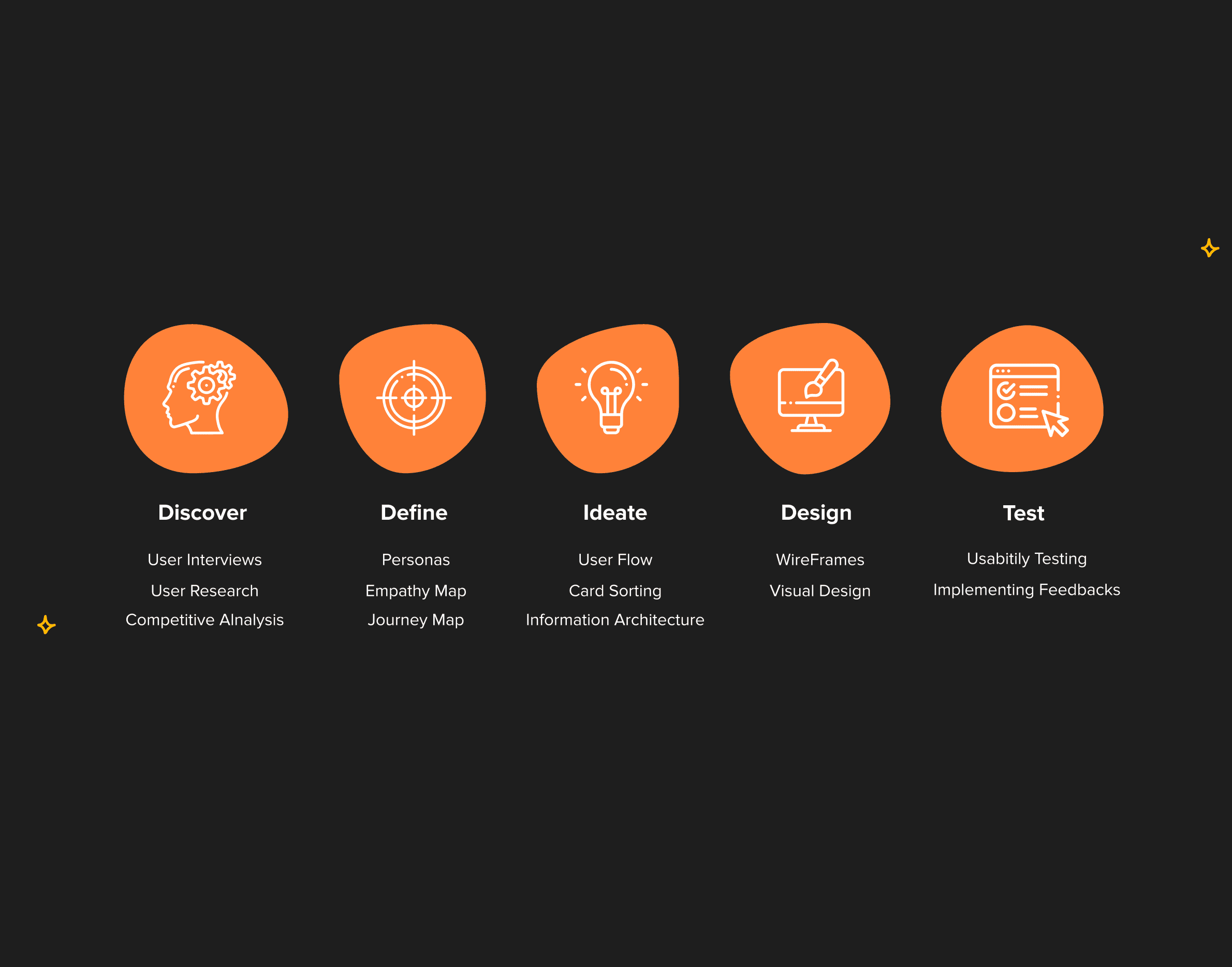
Discover Phase
Discover Phase
Interview
We interviewed around 6 participants, and here are some of the sample questions that we asked :
Describe your typical day?
What apps do you use the most and which one is your favorite?
what changes do you like to make in your life?
How do you build habits at the moment?
If you use an app for building habits what is it? What advantages and disadvantages does it have?
What is the hardest part of the process of changing habits?
Do you get help from your family and friends to solve your problems?
Key insights derived from the Interviews
Users main problem is motivation
Users prefer using free apps
Users want to join a community of people with the same goals
Simplicity is important to users
Users prefer traditional tools to track habits because apps were unable to help themare
Users procrastinate building habits despite knowing their importance
Survey
We conducted a short survey of 17 questions to understand the needs and problems of users, their current way of building habits, and the tools they use, around 100+ people responded.
Key insights derived from the Interviews
Users main problem is motivation
Users prefer using free apps
Users want to join a community of people with the same goals
Simplicity is important to users
Users prefer traditional tools to track habits because apps were unable to help themare
Users procrastinate building habits despite knowing their importance
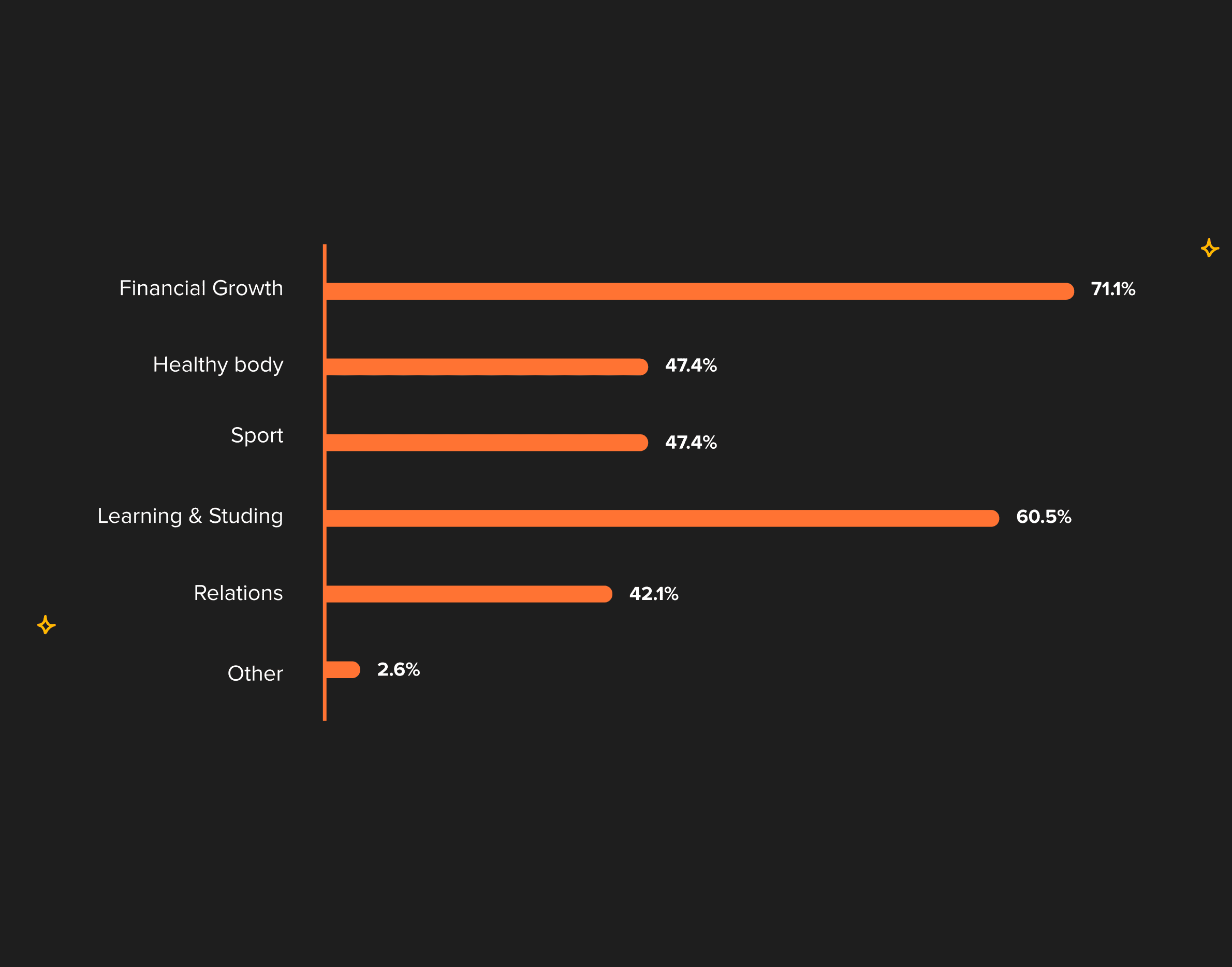
In which parts of your life do you like to make a change ?
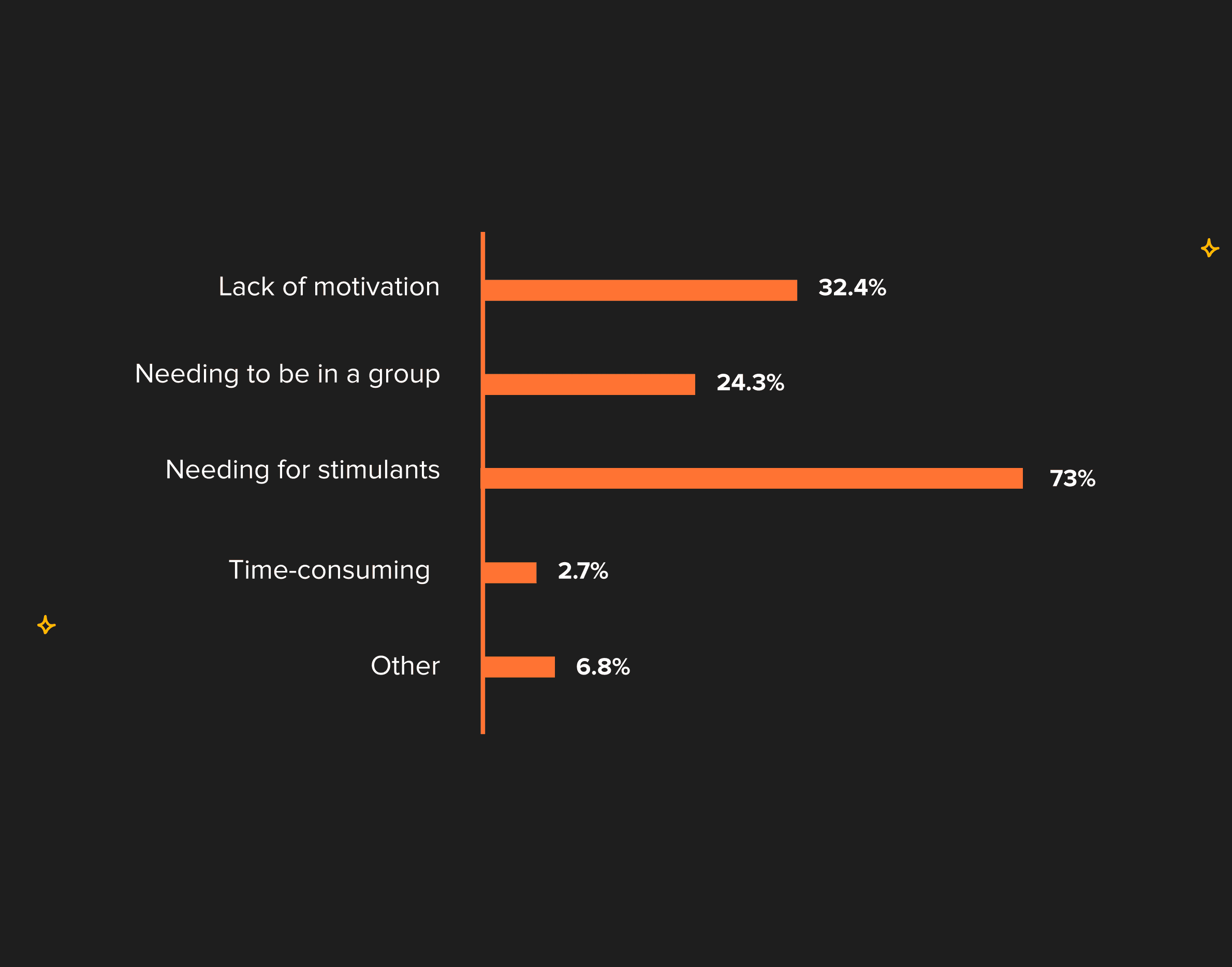
What challenges do you face in changing your habits ?
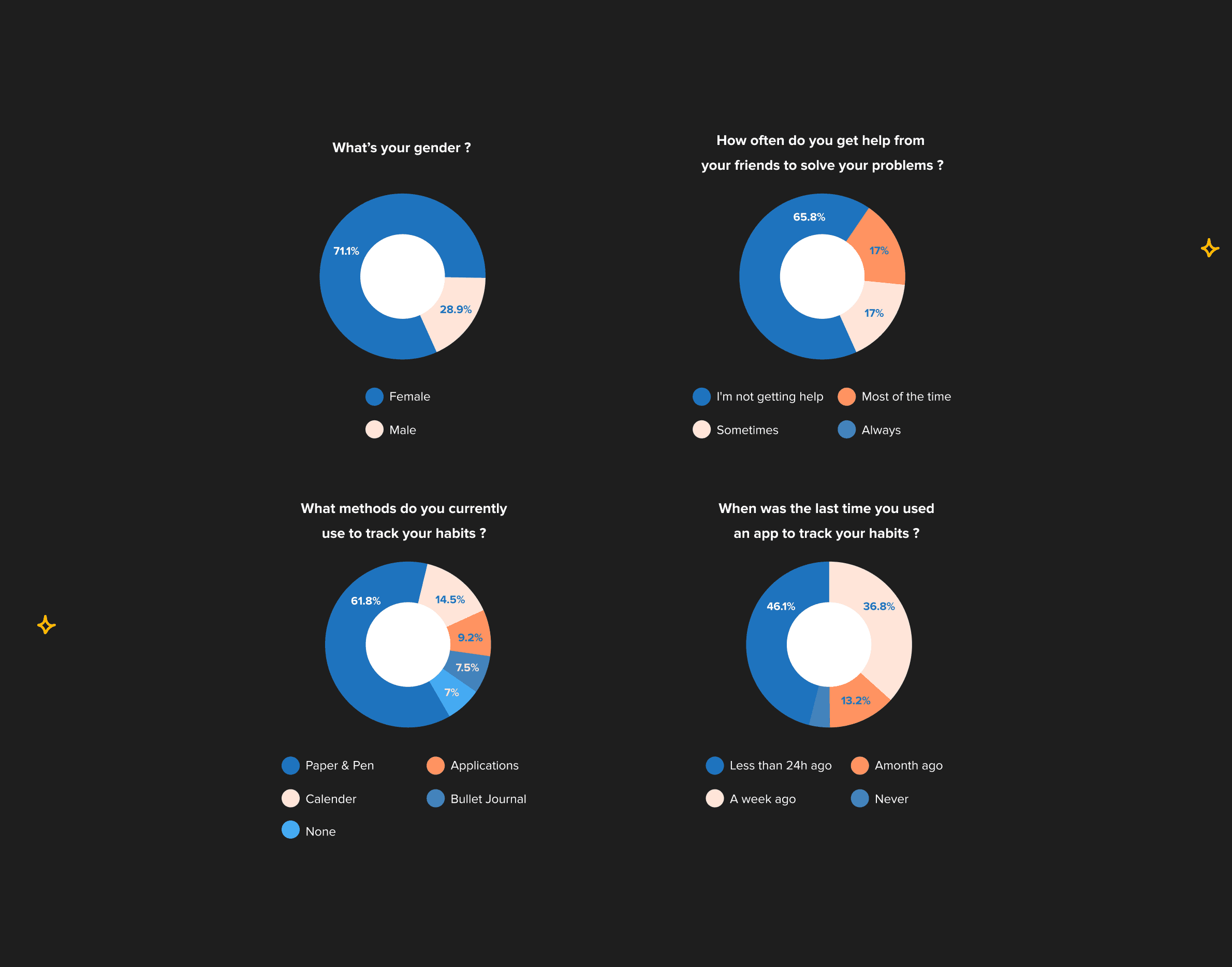
Key insights derived from the Survey
People always like to get help from friends
People prefer to solve their problems in groups
Most of people use paper and pen for planning
People mostly want to form habits that will help them grow financially
Biggest challenge for building a habit is motivation
Competitive Audit
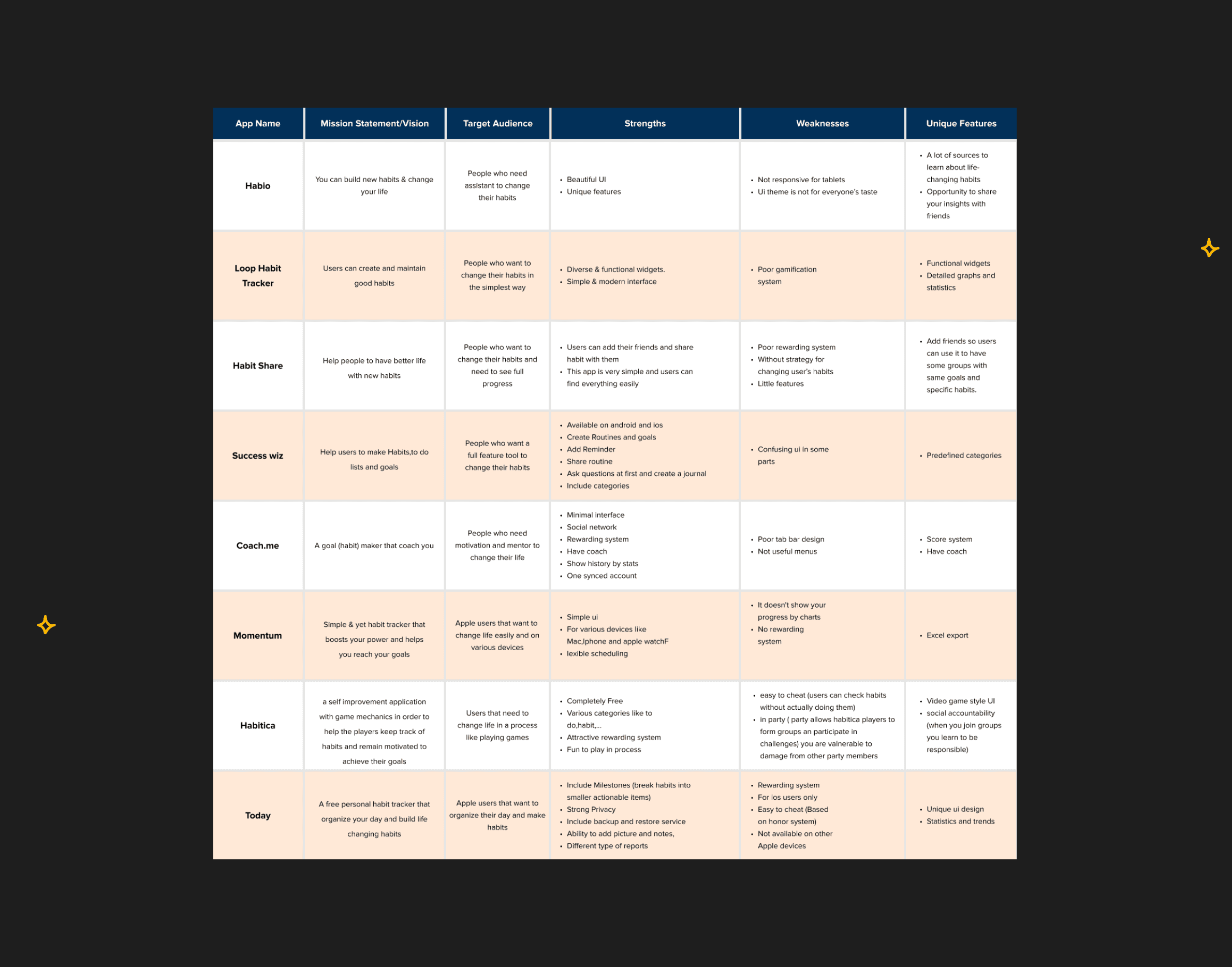
In order to know our competitors and learn from their triumphs and mistakes, we conducted a competitive audit.
It helped us to gather many valuable insights.
Define Phase
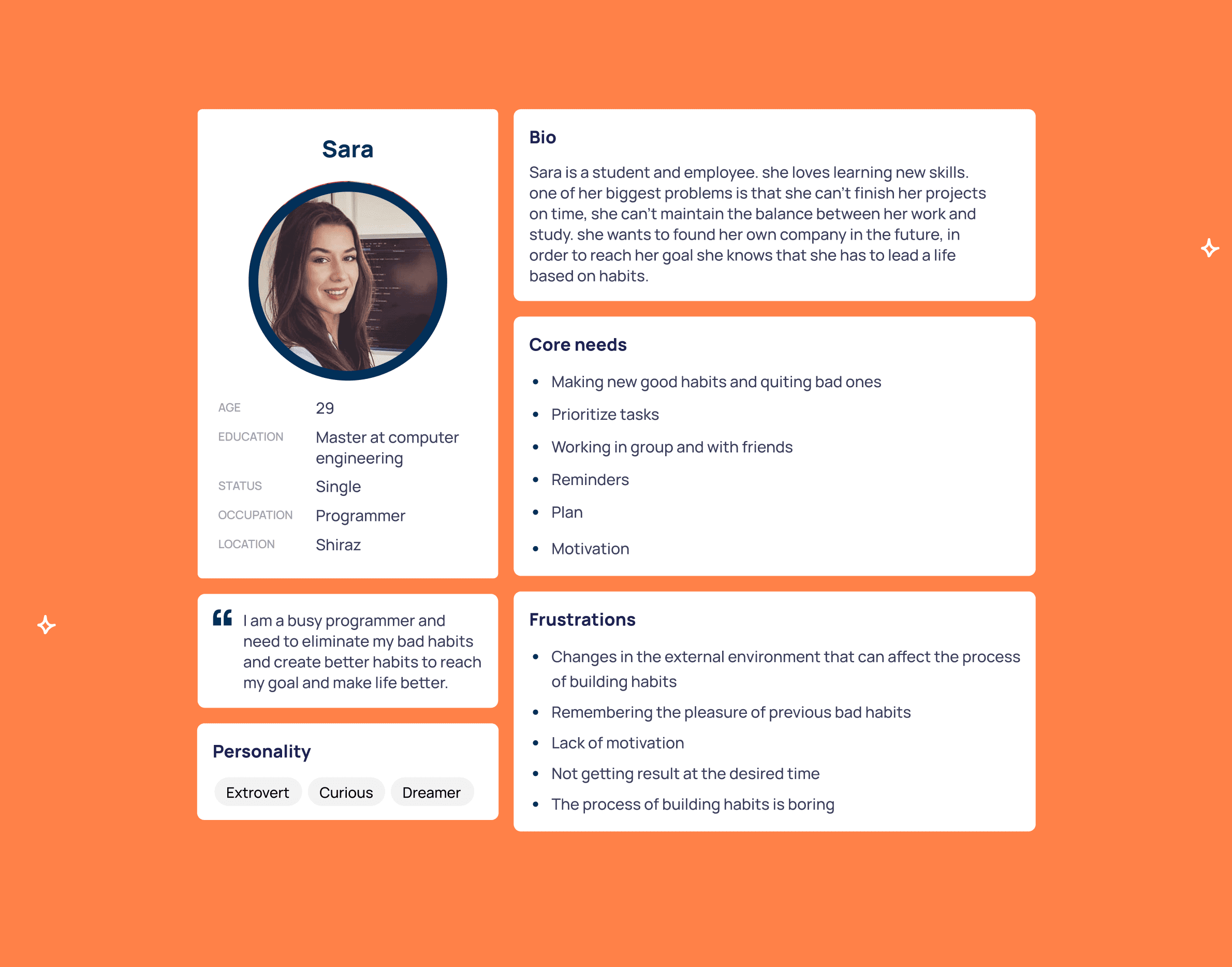
Persona
To place ourselves in user's shoes and understand them better we defined a persona based on the survey and user interviews.
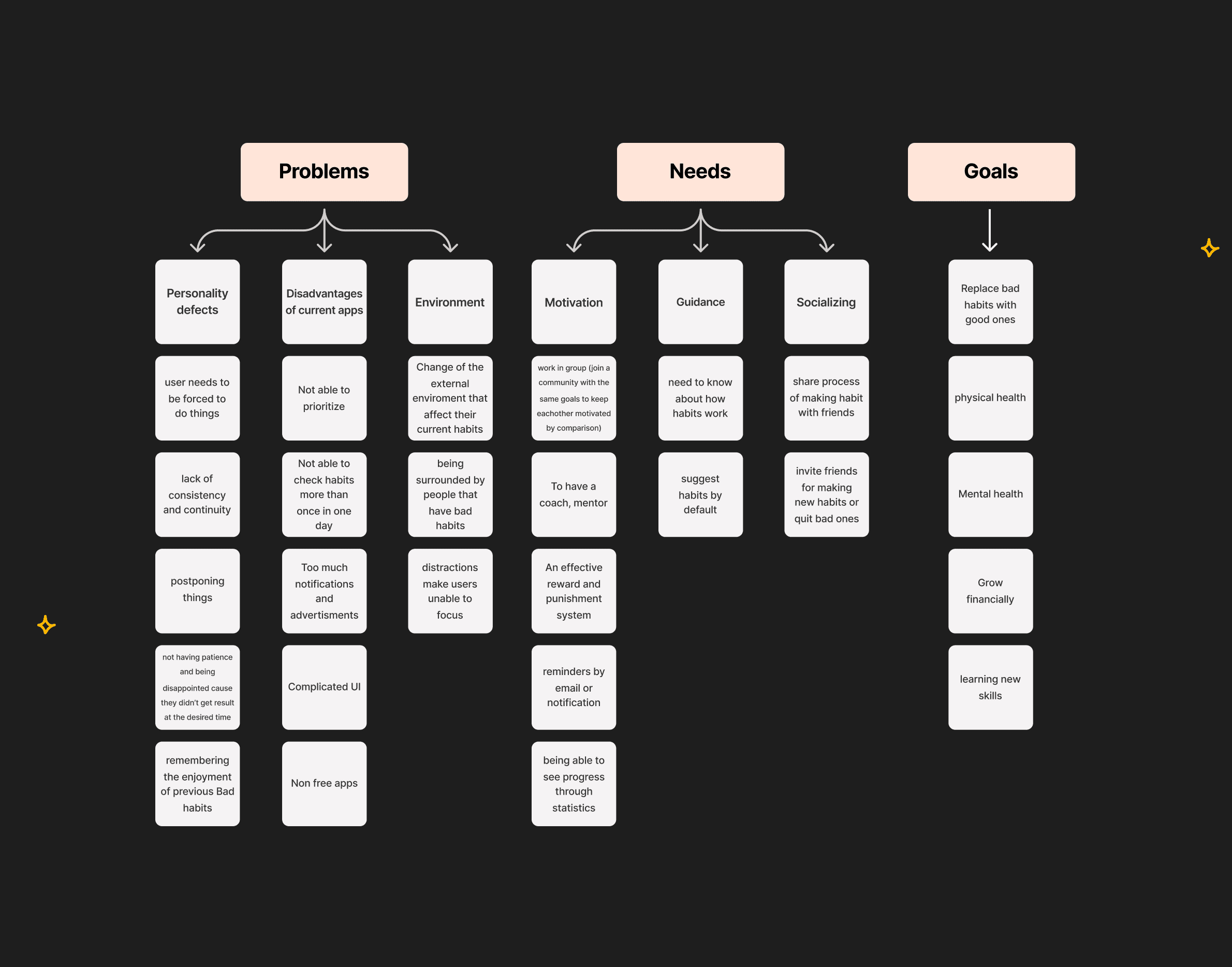
Affinity Diagram
After collecting informations from survey and user interviews we created an affinity diagram to have a better view of user’s needs, problems and etc.
User Journey Map
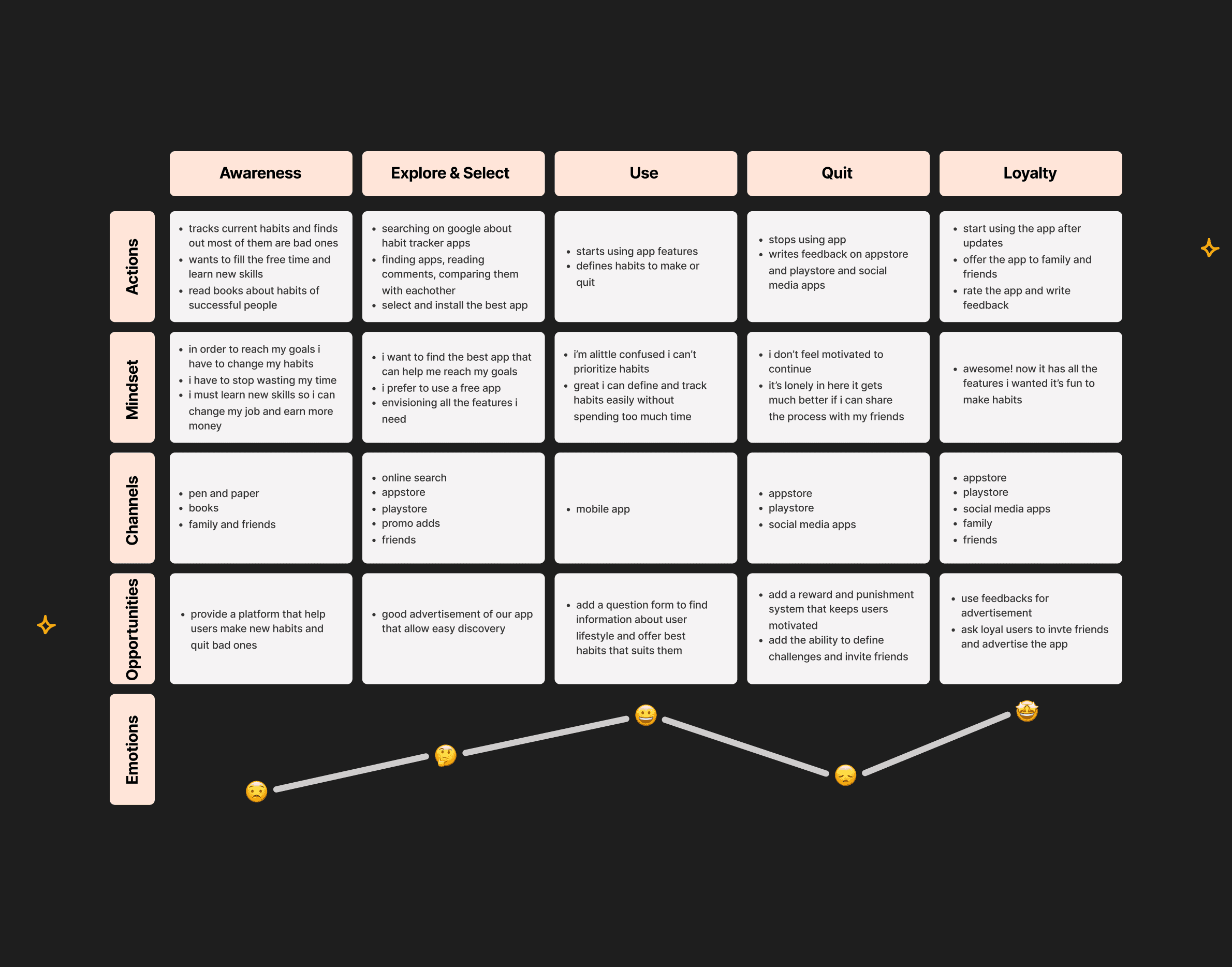
In order to visualize the process that users encounter through our app we created a user journey map Based on the interviews that we did at the beginning. It helps us to understand user’s painpoints, needs, etc and create a better experience for them.
User story
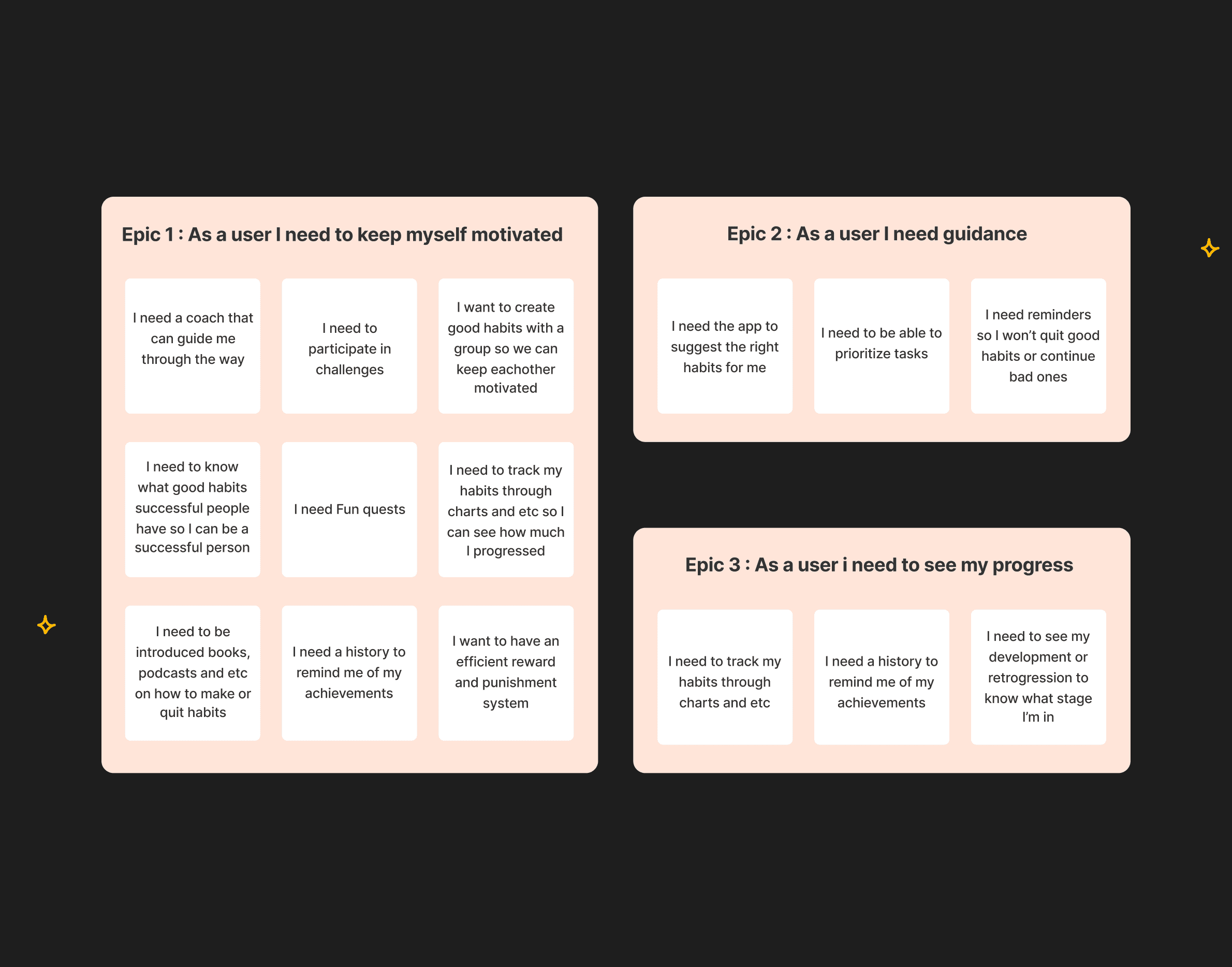
We created user stories to find out what features we should put in the app. This helps the development team get a better idea of the user's needs.
Ideate Phase
Brain Storming
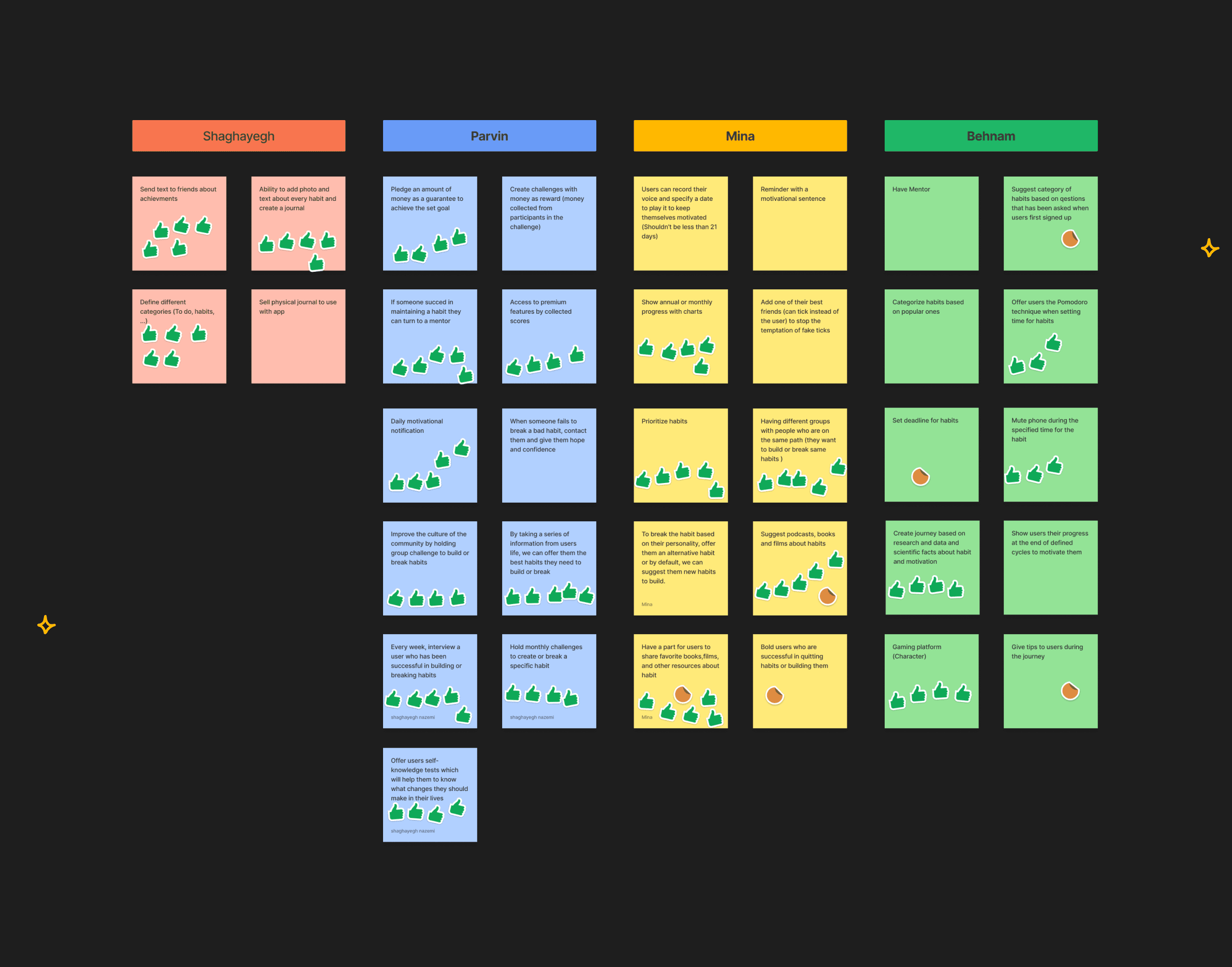
After defining the problems we held a brainstorming session, and all the team members came up with their ideas. Then we discussed the ideas and voted on each of them. We also concluded that we could combine some ideas.
Decision matrix
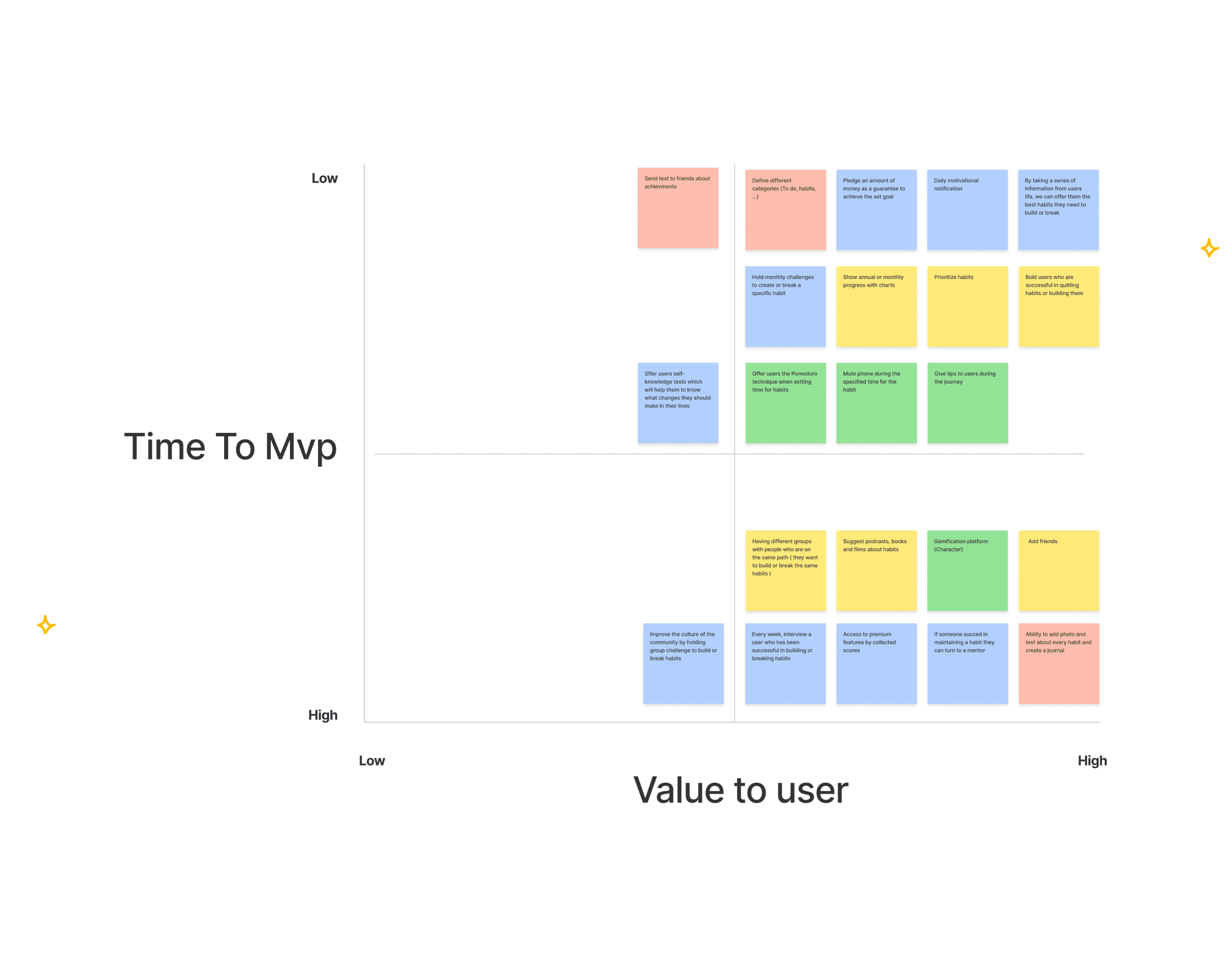
In the next step, we prioritized ideas based on “time to MVP” and “Value to user” using the decision matrix
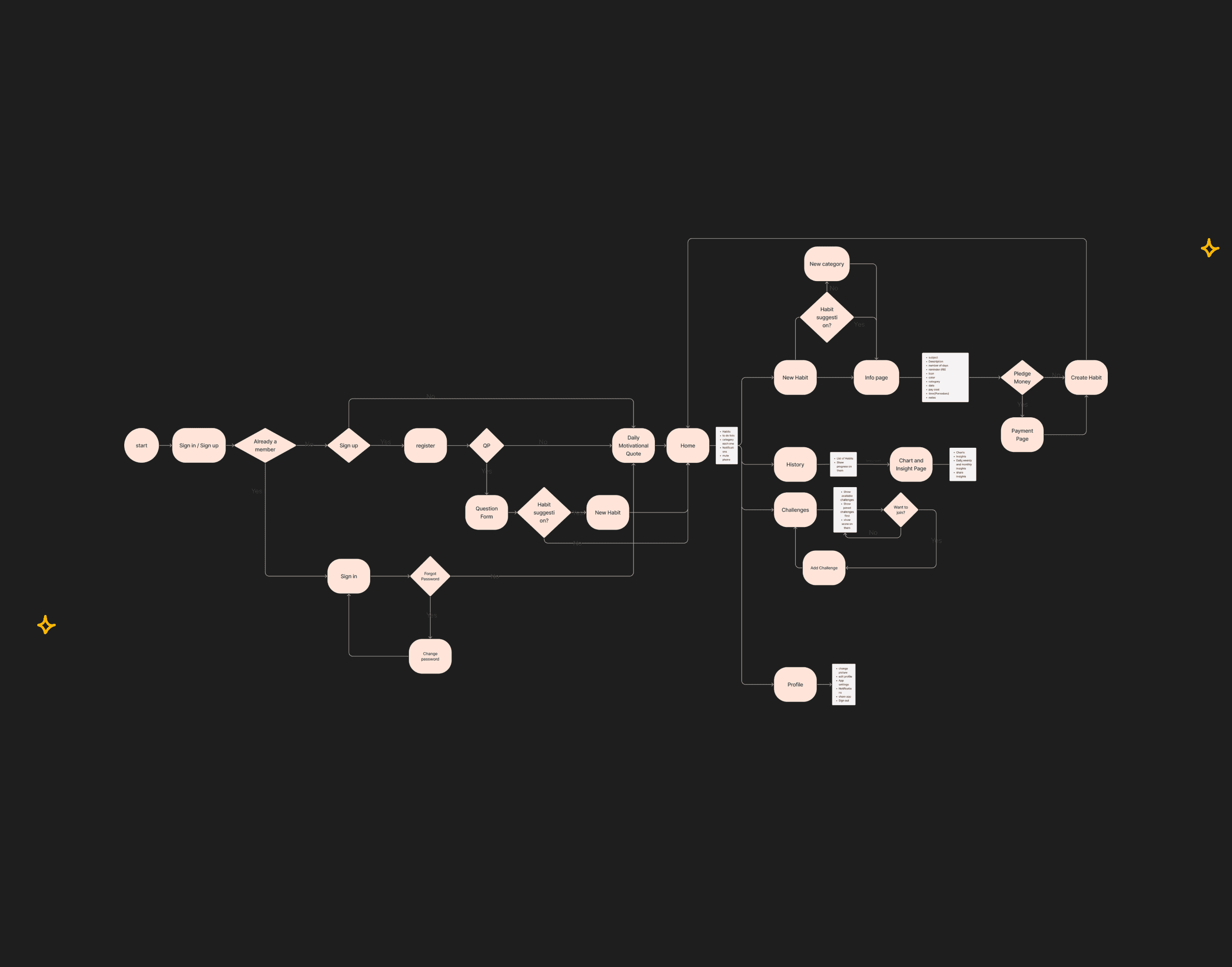
Information architecture
Now that we've done our research analysis and ideation we have to organize the content. We used the user-flow diagram to demonstrate each step the user will take to complete a task.
Design Phase
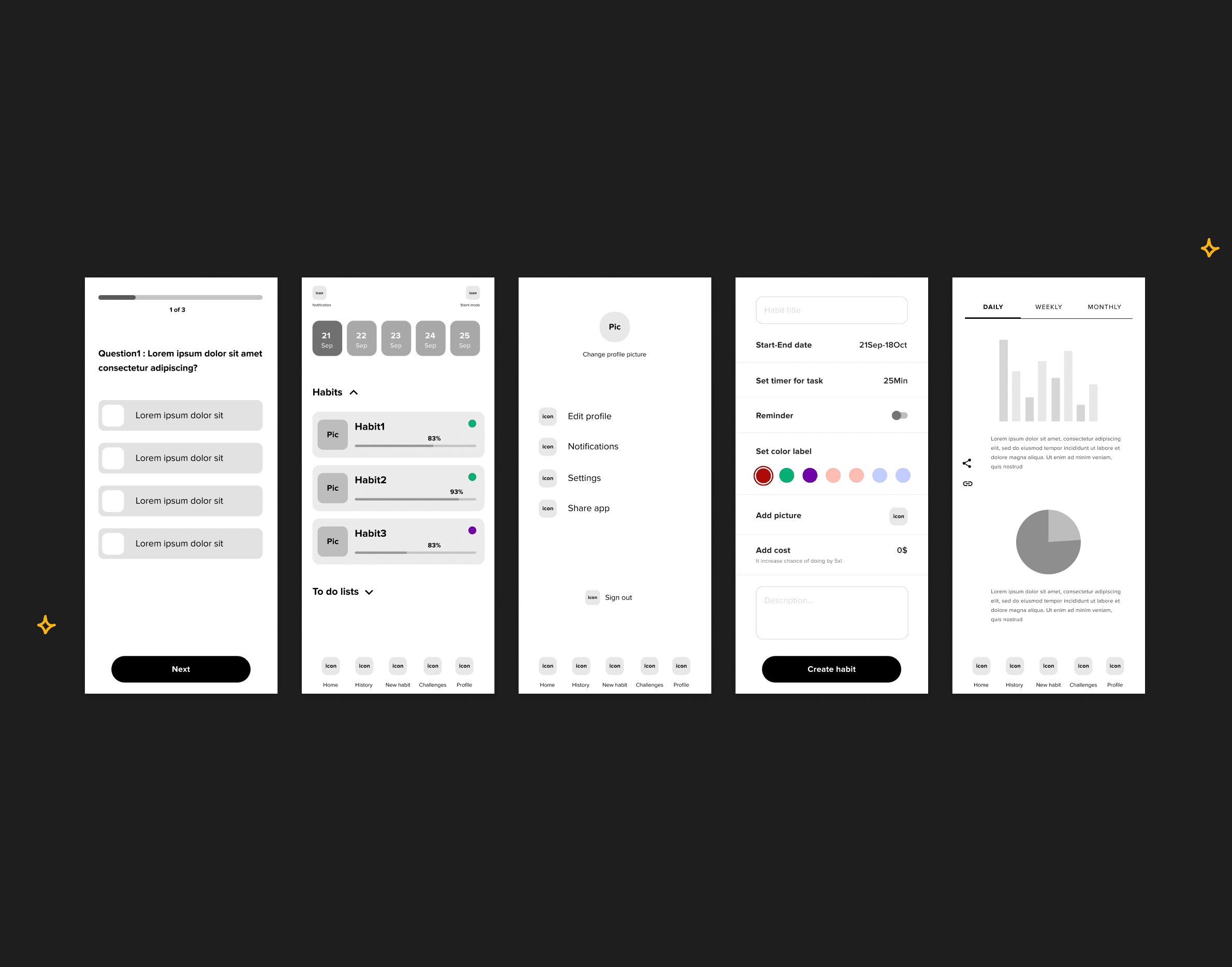
WireFrames
The basic structure of the app was ready, so we started our design process by drawing wireframes to turn our ideas into a concept.
User Interface
In the next step, we transformed the lo-fi screens into a comprehensive, organized, and visually appealing design.
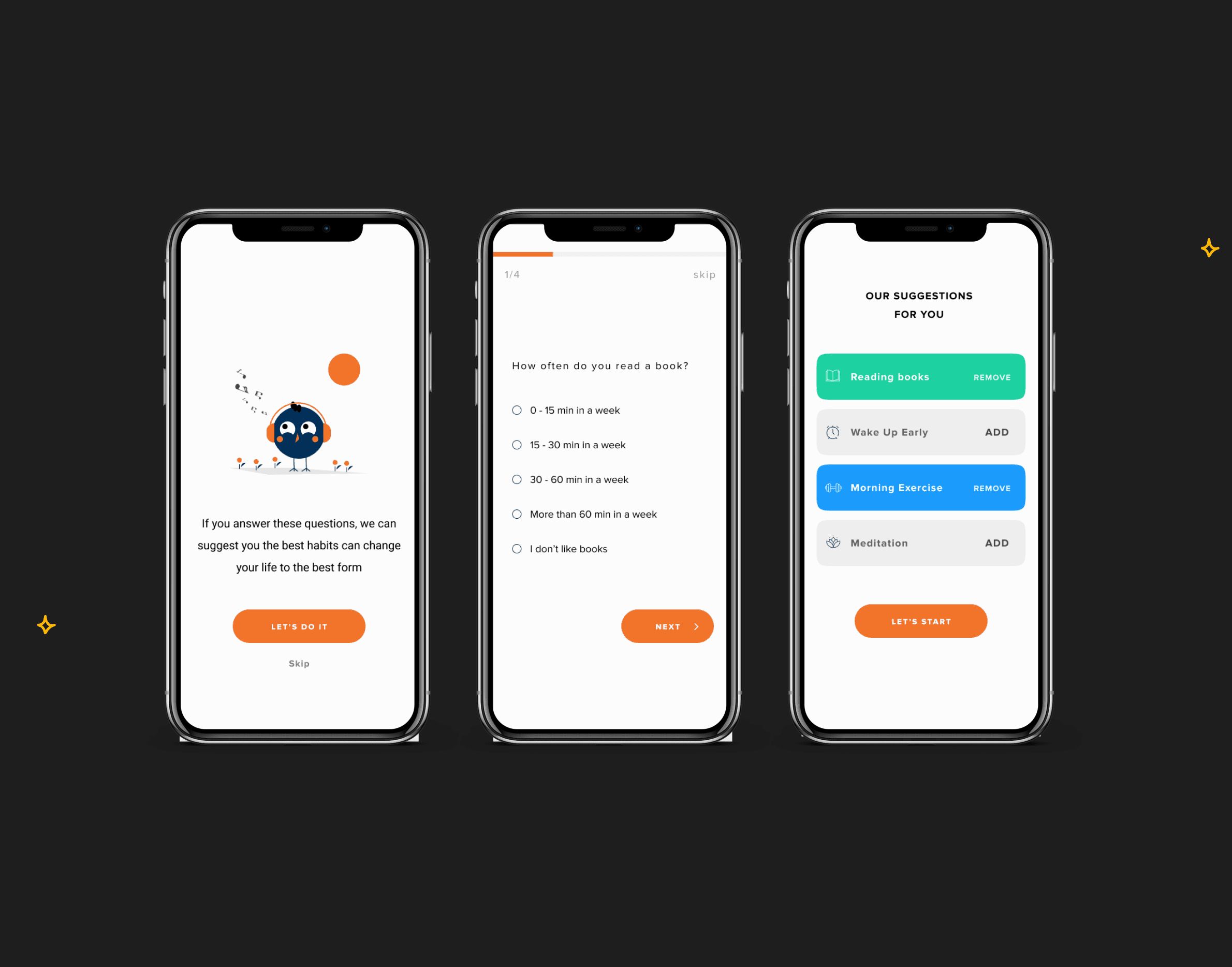
Onboarding
It’s easy to start! You can add habits yourself or answer some questions and use our suggestions.
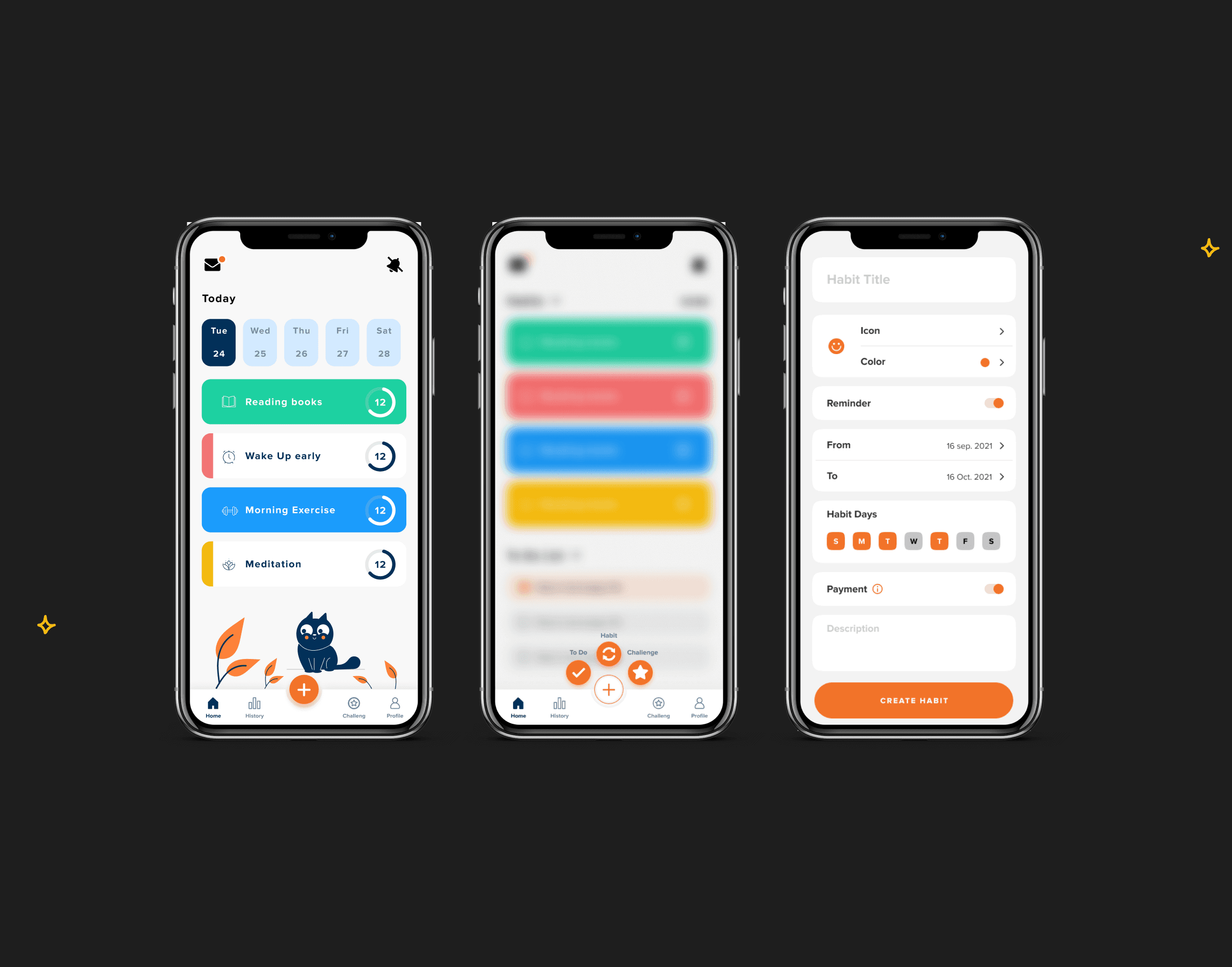
Build new habits
Add habits by tapping on the plus button and filling the form.
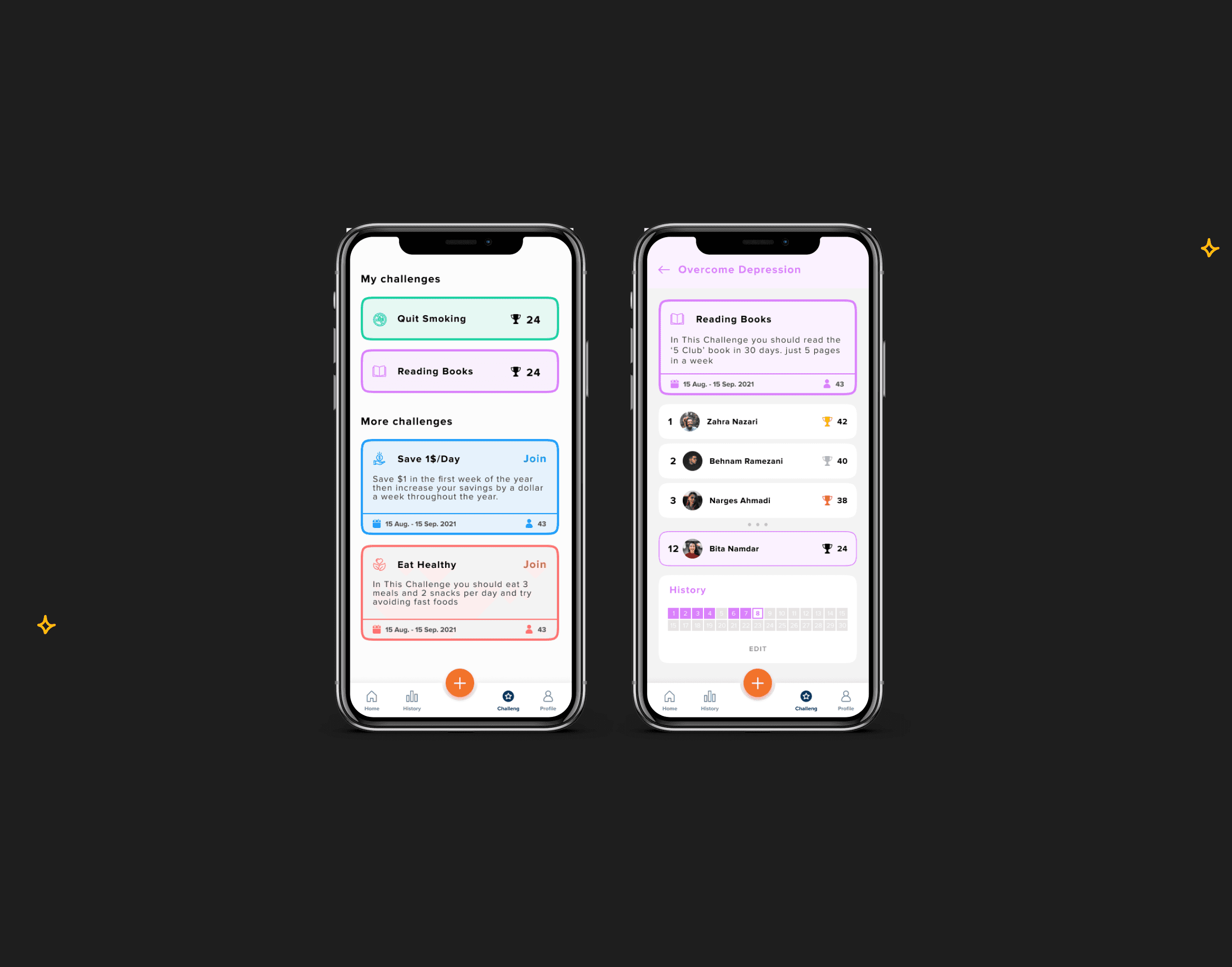
Challenges
Do you need more motivation? Join challenges and build habits with your friends to grow together
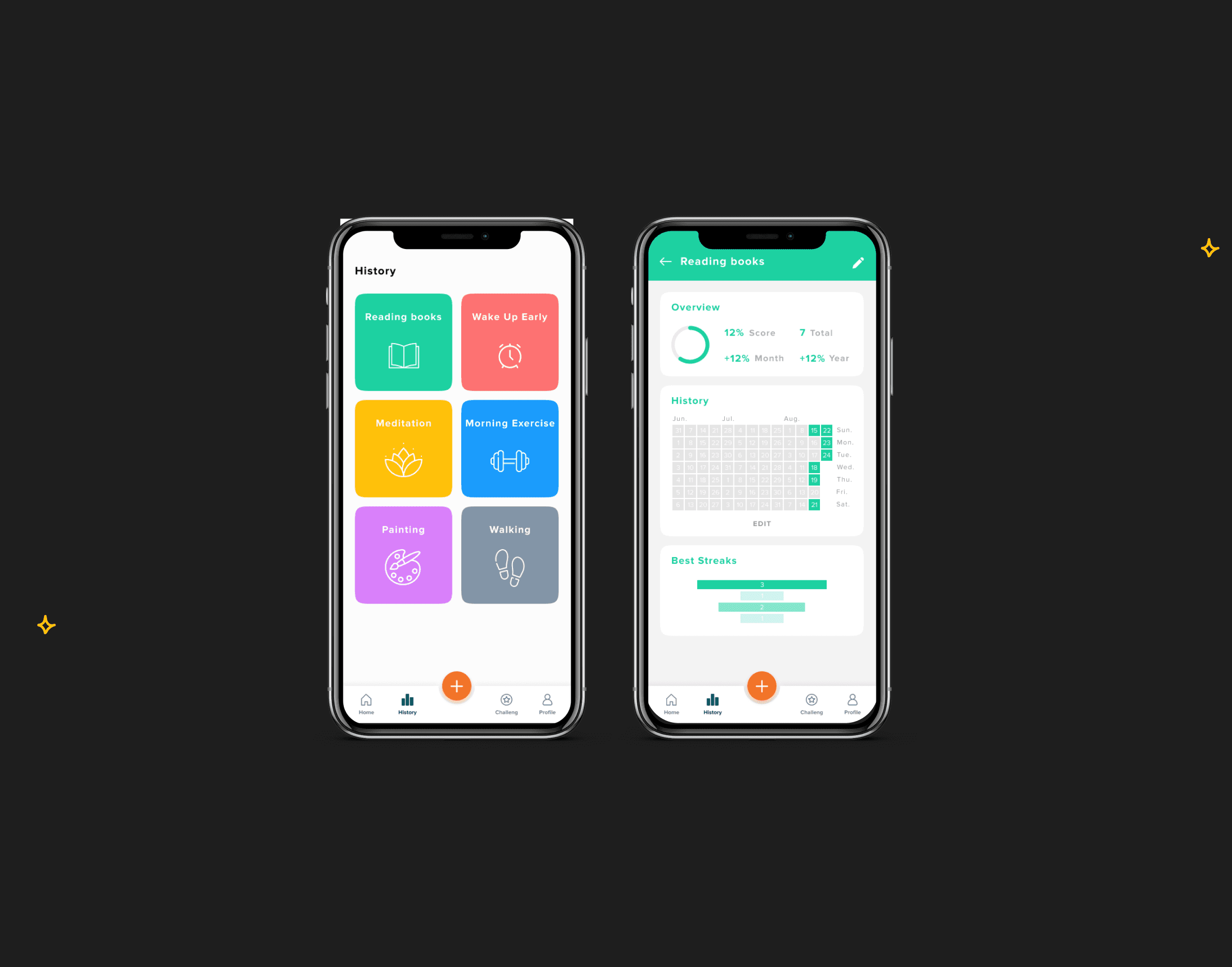
Keep track of your progress
Building or quitting habits take time. Being able to see your progress and achievements and celebrating them is a key to motivation.